
Episode 602: Joel J. Miller

December 1st, 2025
Listen to Episode on:


Watch the Unabridged Interview:
Order Books
Books: The Original Hardware for Knowledge
If ideas and knowledge are the software, then books have always been the longest-running hardware.
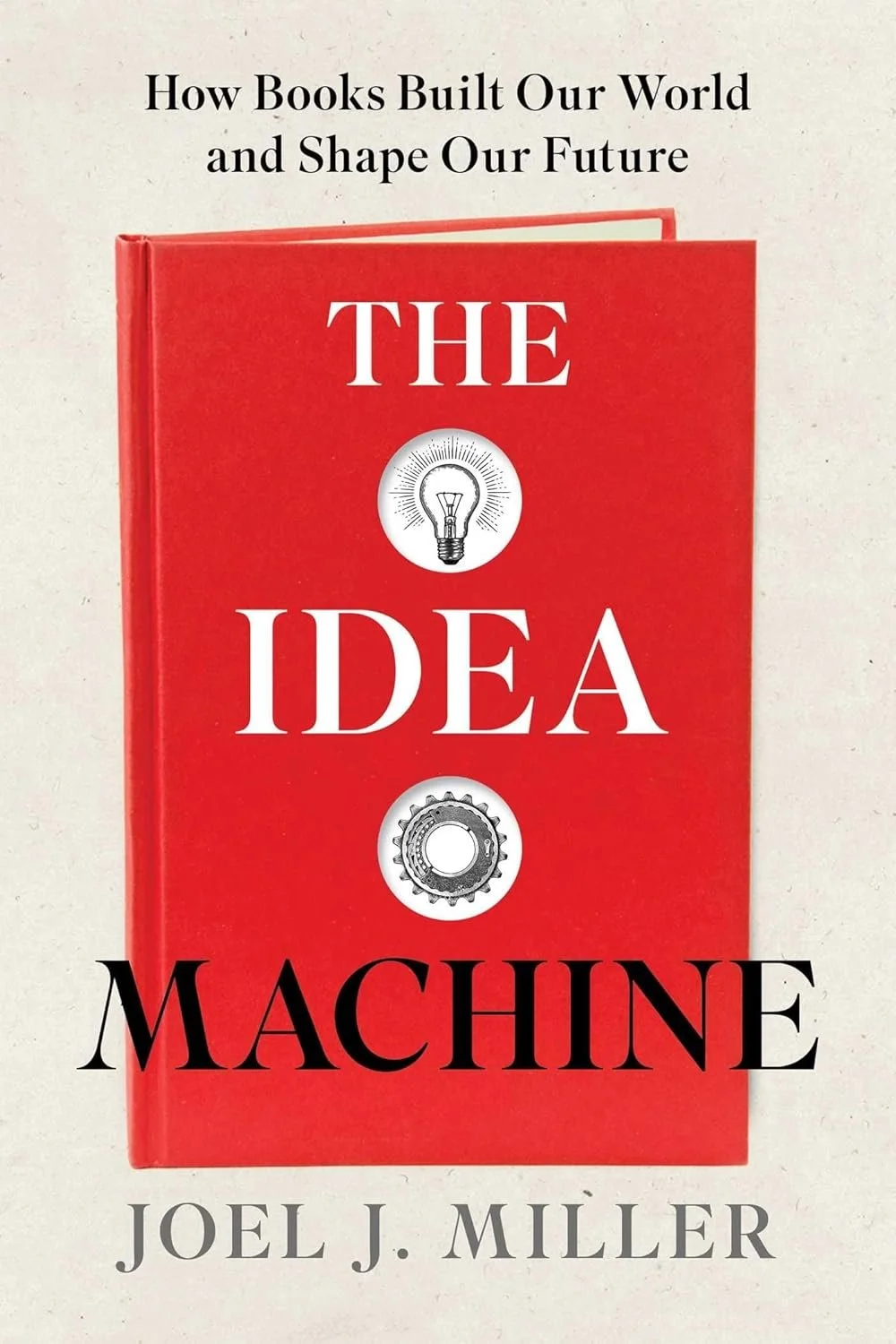
Author and former publishing executive Joel J. Miller’s latest book, The Idea Machine: How Books Built Our World and Shape Our Future, delves into the history and evolution of books as a physical technology for idea transmission.
Joel and Greg discuss the book’s origins from ancient times with Socrates and Plato, to the development of the codex, and the impact of modern digital reading. Joel also shares insights from his experiences in the publishing industry, the importance of physical books in shaping thought, the role of metadata in organizing knowledge, and predictions about the future of books in an increasingly digital world.
*unSILOed Podcast is produced by University FM.*
Episode Quotes:
Books are hardware for knowledge
09:09: I read someone say essentially this definition of a machine, that it is an assembly of parts that are, you know, designed to produce a particular end. And I do think that there is both institutional and cultural kind of degradation of that. And I thought that is what a book does. A book is a thing that is designed to help produce a particular outcome, which looks like a number of things, but one of them is to develop elaborate schemes of thought that would not be able to exist outside of that physical format. If you did not have the physical thing, the hardware, like you said, if you did not have that, the software would not matter because you do not actually have the ability to take all these elaborate thoughts that we have and hold them in our minds. Our working memory is too short, the ability to go back and revisit and revise is non-existent more or less. And so writing enabled us to develop ideas, and we access those through books.
Books as vessels of ideas
13:24: Ideas live in books. Whether they're arguments, like it's history, it's someone explicating a topic, or it is a novel where somebody is accessing, you know, a kind of a window on another self or things like that. The book is always there to do that for us.
On metadata, organization, and libraries as knowledge systems
25:16: Data is every bit as wild and unruly, and humans have been trying to figure out ways of getting it under control since the beginning, because we create more information than we can even use. We always have. And the ability to go use a library effectively requires some kind of scheme of organization in order to make it, to make things findable. And so we see that not only in the micro case of a single book, but we can see it blown out across an entire library where people have discovered ways of making ideas findable within them. And at every stage, as the technology has advanced, the job has gotten more complicated and also more interesting because the solutions emerge from that technology that enables us to get even better solutions to the problem.
Show Links:
Recommended Resources:
Guest Profile:
Staff Profile at Full Focus
Professional Website