

November 13th, 2026
Listen to Episode on:


Watch the Unabridged Interview:
Order Books
The Science of Misery: Exploring Emotional Mechanisms
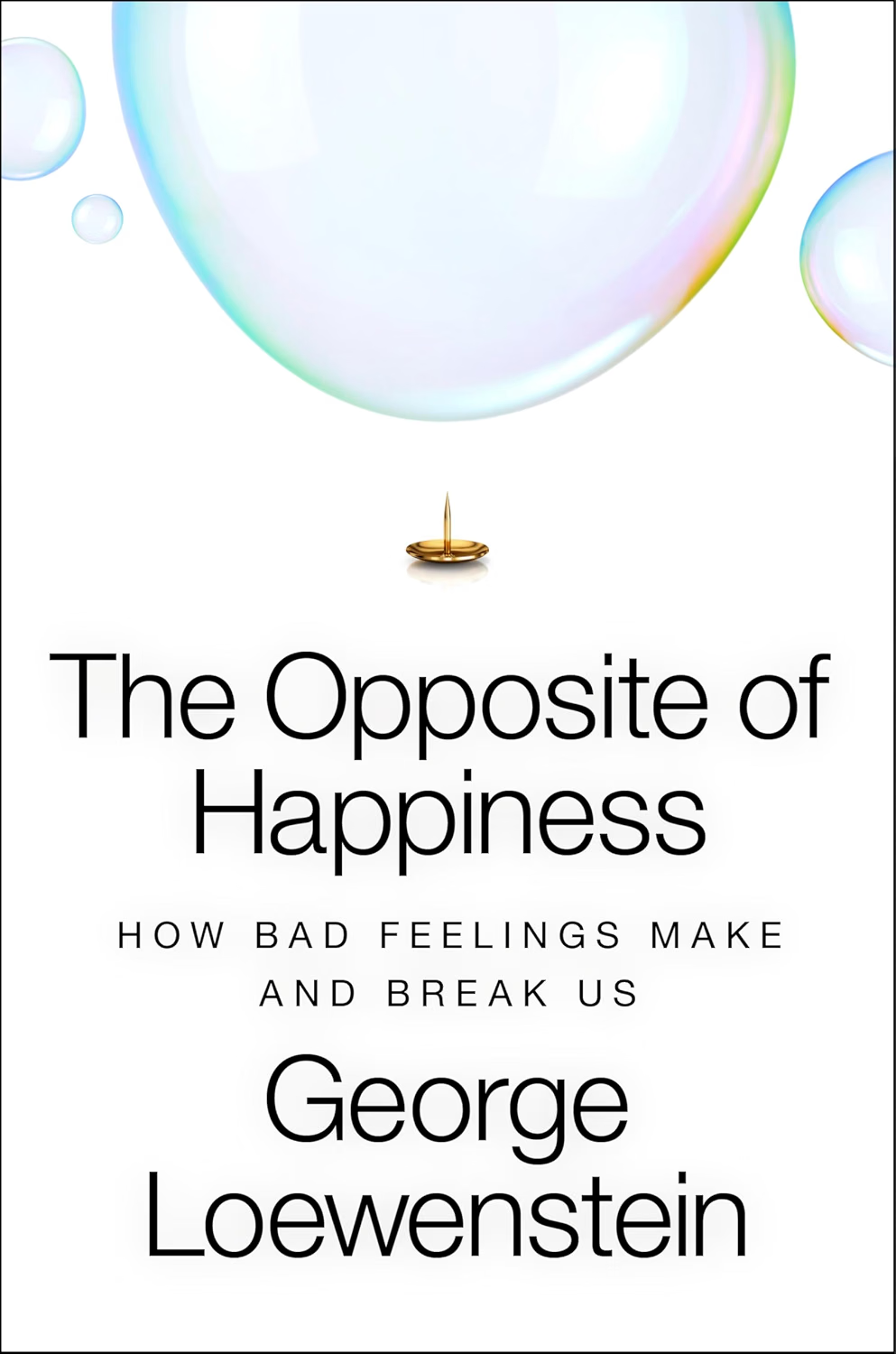
George Loewenstein is a professor of economics and psychology at Carnegie Mellon University and an author. His latest work is titled The Opposite of Happiness: How Bad Feelings Make and Break Us.
Greg and George discuss why negative emotions dominate over positive emotions in human attention and experience. George argues emotions are evolved “programs” that reconfigure perception, memory, and preferences, undermining the economics assumption of stable preferences and highlighting intrapersonal and interpersonal empathy gaps that distort forecasting, judgment of addicts, and understanding of regret.
They also discuss mood-congruent memory, meta-emotions that amplify misery, fragile self-esteem, sociometer theory, upward social comparison, asymmetric hedonic adaptation, and how hope can impede adaptation. George covers disclosure and confession motives, choking and attention-driven positive feedback loops, and why some emotions are functional only within a narrow bandwidth, viewing depression as malfunction.
unSILOed Podcast is produced by University FM.
Episode Guide:
00:00 Why Misery Matters
00:56 Negativity Bias Explained
03:38 Affect Missing in Economics
04:27 Emotions as Evolutionary Programs
06:09 Empathy Gaps and Hot States
13:47 Meta Emotions and Regret
15:28 Insecurity and Self Esteem
16:32 Evolutionary Roots of Misery
22:35 Status Shame and Comparison
25:29 Adaptation Hope and Purgatory
34:09 Disclosure Bragging Confession
37:08 Choking and Feedback Loops
40:38 When Emotions Go Out of Bounds
43:01 Depression as Malfunction
47:27 Meaning Versus Happiness Policy
52:10 Economics and Psychology Together
Episode Quotes:
Why we judge others for feelings we can't understand
[10:06] I think the most interesting thing about empathy gaps is they happen intrapersonally, within a person, but they also happen interpersonally, and I think they're a huge source of lack of sympathy for other people. For example, we are so ready to judge addicts who do terrible things when they are under the power of their own cravings, and that's just because we can't imagine the force of craving on our own behavior. I think that's actually a big reason why people start taking addictive drugs in the first place, because if you're not craving, you just can't imagine the kind of hold that craving could have over you. I remember years ago, I taught a freshman seminar on drug abuse and addiction, and I asked the students in the class, "Do you think if you became addicted to heroin that you would ever steal from your parents, or if you had children, abandon your children?" And they all said, "Oh, there's no way I would ever do these things." But of course, they weren't addicted. They weren't experienced craving. And anybody experiencing that level of craving is very likely to do things that the rest of us would judge them very negatively for.
Can hope actually make us more miserable?
[26:34] Hope is generally a good thing, but a perverse feature of hope is that it impedes adaptation to negative things.
Emotions as programs
[04:42] The way I think about emotions, and I adopted this idea from evolutionary psychology, is I think about emotions as programs. These are programs that evolved to deal with recurring situations of evolutionary significance, things like escaping predators, mating, and so on. [05:18] So when we're in different emotional states, it's as if we are completely different people. Our brain reprograms us. Our senses change. Our memory changes. Our hormones change. Our muscles change. Everything. We become really completely transformed by different emotions.
The impact of meta-emotions on how we feel
[14:42] We're not supposed to envy our friends, and then when people do envy their friends, they end up feeling guilty about it. So now, initially, they're just experiencing envy, but now they're experiencing a combination of envy and guilt.
Show Links:
Recommended Resources:
Guest Profile:
Guest Work:
The Opposite of Happiness: How Bad Feelings Make and Break Us
Exotic Preferences: Behavioral Economics and Human Motivation