
Episode 692: Nir Halevy

October 16th, 2026
Listen to Episode on:


Watch the Unabridged Interview:
Order Books
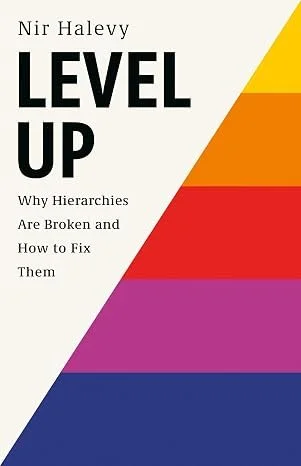
Level Up: Fixing Broken Hierarchies and Organizations
Nir Halevy is a professor of Organizational Behavior at the Stanford Graduate School of Business, and the author of the new book called Level Up: Why Hierarchies Are Broken and How to Fix Them.
Greg and Nir argue that hierarchy can never be eliminated from organizations because of coordination needs, division of labor, and human drives for social comparison, achievement, predictability, and safety, yet it can become self-reinforcing and abusive.
Nir diagnoses “broken hierarchies” via his three interlinked symptoms—ultra-competitiveness, injustice, and instability—which damage wellbeing, retention, and performance, and can be worsened by misdesigned incentives and oblivious leaders. He proposes a treatment framework—CPR: common value, pluralism (multiple pathways and dimensions for status), and relatedness—along with structural options like co-leadership to dilute domineering “dark triad” leaders. They also discuss examples from sports, ballet, secrecy at work, and measurement signals like turnover, absenteeism, and disengagement.
unSILOed Podcast is produced by University FM.
Episode Quotes:
How everyday action shapes hierarchies
19:48: I would say that it's not just the responsibility of top management or the CEO or the HR leader to kind of take care of the structure of the hierarchy because there are a lot of everyday behaviors that we engage in, right? So, Greg, when you spread malicious gossip about a coworker, right, that pulls them down in the eyes of others, and maybe that creates fewer opportunities for them to collaborate. When you're writing a gratitude letter for a colleague, that actually creates a different type of culture for all of us, right? When someone makes a contribution that is not really valued by others, but you double down and emphasize their contribution, you really highlight it, you broadcast it more, then you're contributing to kind of a pluralistic hierarchy. So I think, yes, there are some org design features that are coming from the top down.
On rethinking the path to leadership
08:45: We can be more pluralistic about the pathways for gaining power. We don't have to assume that leadership involves politics or undermining other people or fierce competition and stabbing people in the back. There are different ways to contribute and ascend and become a leader and lead once you're in that position.
Status doesn't have to be a zero-sum game
11:47: A lot of people tend to think about status as a zero-sum game. We don't have to think about it as a zero-sum game, just like we don't have to think about negotiation as a zero-sum game, right? So, if you're creating a pluralistic environment where there are a lot of different dimensions, bases, pathways to status, then it doesn't have to be mutually exclusive.
Show Links:
Recommended Resources:
John Roberts podcast
The Paths to Power podcast
Charles A. O'Reilly III podcast