
Episode 642: Roger Spitz
April 20th, 2026
Listen to Episode on:


Watch the Unabridged Interview:
Order Books
Future-Readiness: A Call to Adaptability
How did working with first-principles thinking allow SpaceX to maneuver nimbly past established aerospace giants? What are the limits of prediction and scenario models under “deep uncertainty,” and how can we apply them to AI’s potential effects on society?
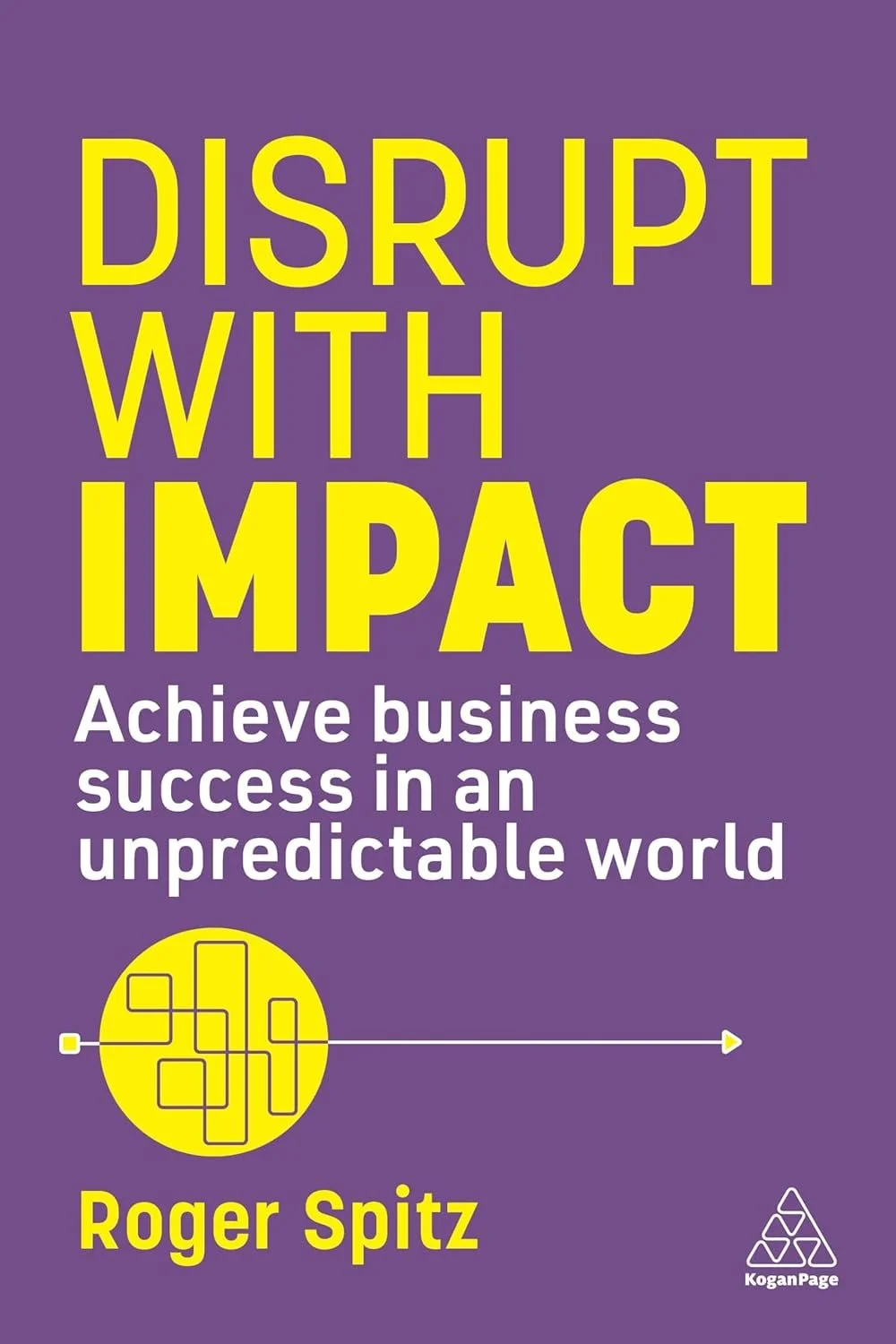
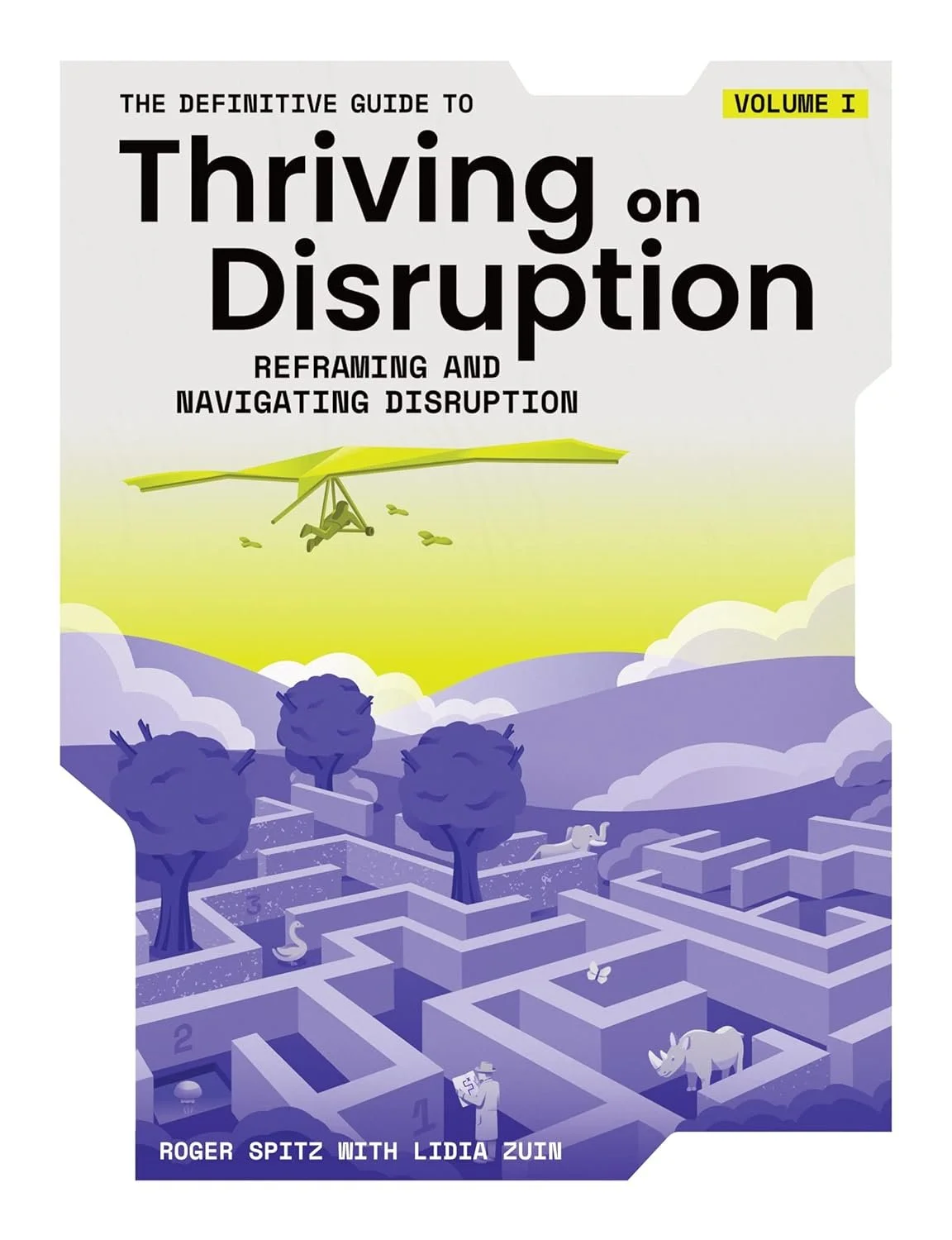
Roger Spitz is a futurist, the president of Techistential, and the author of several books. His latest titles are Disrupt With Impact: Achieve Business Success in an Unpredictable World and the four-volume series of The Definitive Guide to Thriving on Disruption: Volume I - Reframing and Navigating Disruption.
Greg and Roger discuss ‘Techistential,’ named from “tech existentialism,” an agency-focused philosophy for being human in a technological world where algorithms increasingly share decision-making. They argue modern education, governance, and incentives are built for a linear, predictable world, causing people and organizations to seek certainty, delegate judgment to machines, and de-skill. Roger considers resilience in contrast with Taleb’s “anti-fragility,” emphasizing systems that benefit from shocks by avoiding single points of failure, embracing mistakes as data, and maintaining slack.
*unSILOed Podcast is produced by University FM.*
Episode Quotes:
Foresight isn’t about making better predictions.
[54:25] Personally, I think if you take foresight or future studies as making better predictions, I think that is the wrong approach, because I think there are probably ways, and there’s some great colleagues, you know, Philip Tetlock and others who write about this topic. I think that for uncertainty, not deep uncertainty, where there are a range of right answers and et cetera, I think that they always are probably making better predictions so that's what Polymarket and these prediction markets help with, right? But in deep uncertainty, which is completely unpredictable, I think that's where foresight is best.
Is technology giving us less agency?
[03:51] It's an interesting word and it's an interesting question, you know, the meaning of agency. And then the question about whether technology is giving us less agency. My starting point is to, sort of, think about one or two things. So the first one is I’m coming from a filter of systemic change or systemic disruption and unpredictability. I believe the world is not only non-linear, complex, unpredictable, and uncontrollable, but that the cost of relying on the assumption of predictability, linearity, et cetera, is increasing.-( cost in the broader sense.) So in that sense, disruption and change is actually not necessarily a negative, because I think that if things were predictable, things will be predetermined, you'd have no agency. So from a philosophical perspective, you could argue that it is thanks to uncertainty that you can exercise agency as the opposite best spectrum of predetermination.
Fragile vs anti-fragile
[23:50] Roger Spitz: One of the biggest distinctions between fragile and anti-fragile is that in fragile, which is actually most organizations, you hate mistakes. You hate errors. Not only that, but you have incentives to make sure you don't make mistakes.
[24:05] Greg LaBlanc: And if you do have, you disguise them.
[24:06] Roger Spitz: If you do have them, you disguise them. Why is that? It's because basically you're fragile. So if there were mistakes, they could have a significant cost. Anti-fragility loves a mistake. Because what is mistake? It's data. It's emergent; it's a discovery process. It's trial and error. You might discover something new. You're going to respond to that in a way.