
Episode 656: Eric Ries

June 2nd, 2026
Listen to Episode on:


Watch the Unabridged Interview:
Order Books
Startup Governance, Mission Control, and the Failures of Shareholder Primacy
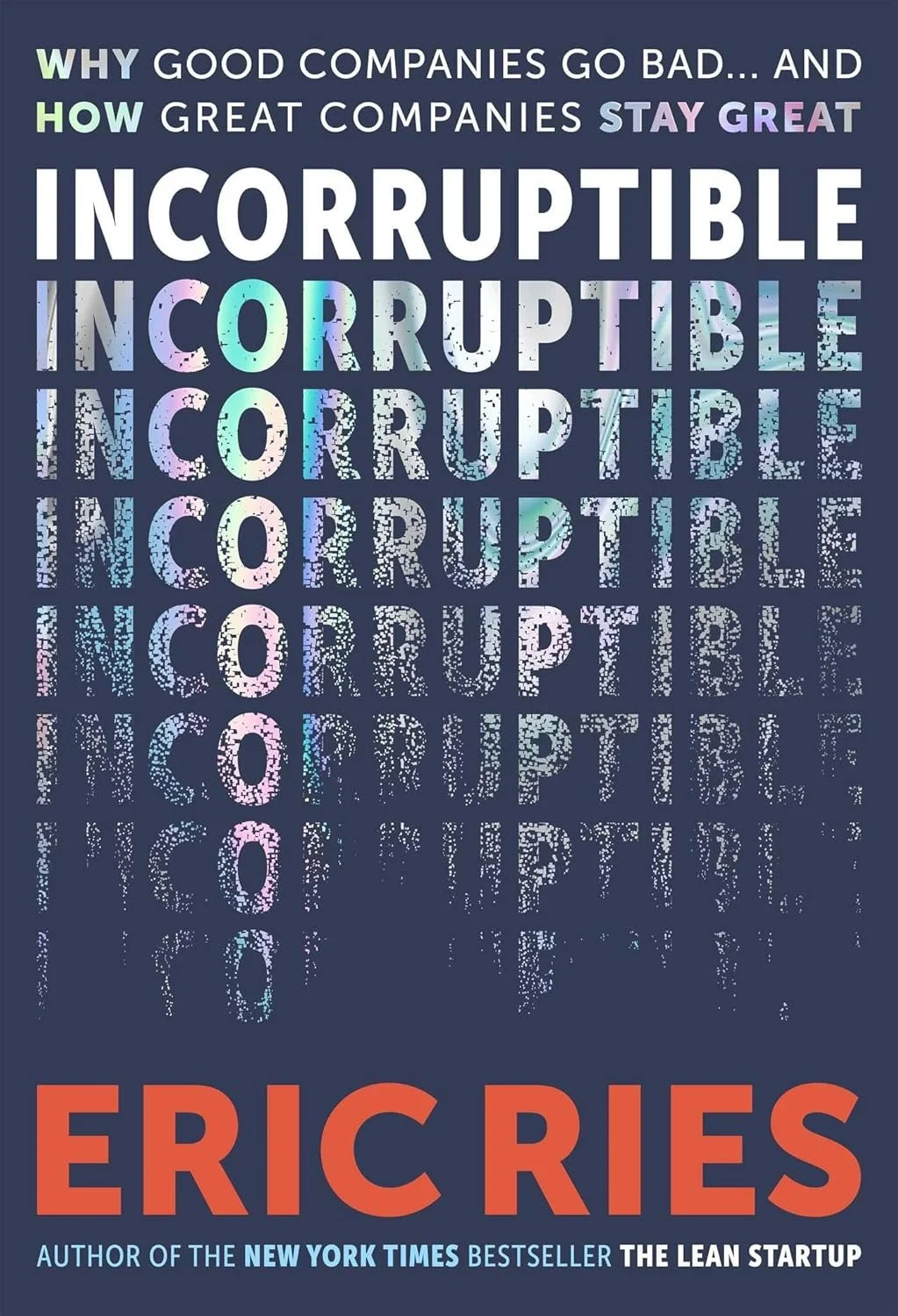
Eric Ries is an author, podcaster, and founder of The Lean Startup. He hosts The Eric Ries Show and his notable books Incorruptible: Why Good Companies Go Bad... and How Great Companies Stay Great, The Lean Startup, Farther, Faster, and Far Less Drama, The Leader's Guide, and The Startup Way.
Greg and Eric discuss why startups and corporations lose their mission through shifts from founder-to investor-control, changing from long-term focus to short-term focus, and purpose-driven to profit-driven behavior. Eric argues governance is “organizational soul craft” and critiques shareholder primacy as a recent, judge-and-academic-driven ideology that creates unaccountable short-term pressure, metric surrogation, and value destruction, even for shareholders.
Eric also explains how markets reward short-term cost-cutting (e.g. reduced R&D), and why mission-driven companies can outperform. He outlines practical protections such as writing mission primacy into charters, converting to Public Benefit Corporations, and stronger structures like foundation ownership (e.g. Novo Nordisk and Patagonia).
*unSILOed Podcast is produced by University FM.*
Episode Quotes:
Mission-driven or mission-hopeful?
12:39: So I think for companies, we're seeing this world now where we have a divergence between the mission statement and the actual mission or purpose of the organization. So the mission statement is lofty. I tell the story in the book of Silicon Valley Bank before it collapsed. Its mission statement was something like, “To advance the innovation economy,” or whatever. But its actual legal purpose was just maximize shareholder value. So this divergence caused the collapse of the bank. And so, first of all, if you have a mission statement, but your purpose says “any lawful act or activity,” you're lying. Just so you know, you are lying to your customers. You are lying to your employees. You're lying to everyone you say that mission to because, according to current legal theory, you could be replaced at a moment's notice by your investors, who will then can change the mission to whatever they want. I call that not being mission-driven. You are mission-hopeful. You're hoping nobody will do this to you in the future.
Governance is organizational soul craft
Governance sounds really boring, but it's really the art of organizational soul craft. It's actually really interesting. And if we can get leaders and founders to pay more attention to it, they can have a much higher probability of their organization enduring.
The age of temporary organizations
27:46: I say we've entered an era of temporary managers running temporary organizations for the benefit of temporary owners because executive tenure, company lifespan, and average holding period of stocks have all collapsed in the last, especially the last twenty-five years, let alone the last forty years. So, I don't think it's possible to really have—it's very difficult to build a value-creating organization in that span, and the markets will punish you for doing so.